Saturday, 31 October 2020

"Waan" -Kashmiri Marsiya and its Advent


Dr.Mazhar Naqvi

Marsiya is derived from an Arabic word Marthiyya. It means lamentation for a departed soul. In contemporary world , it is however considered to be a poem composed mainly for commemorating the martyrdom of Hazrat Imam Hussain (a.s) and other martyrs of Karbala. In Kashmiri language, it is known as “Waan”.The origin of Waan is traced to 14th century A.D, and great Sufis like Bulbul Shah and  Mir Sayed Ali Hamadani contributed much to its advent and popularity in congregations and recitals of Kashmiri Azadari.

Another noteworthy name behind the flourishing of Waan is  Hassi Bhat (1389 A.D). it was during the Chaks’ rule that Waan truly blossomed. Apart from Chaks, during the later phases of Afghan Rule due to efforts of  governors like Kifayat Khan and Amir Khan Kashmiri elegiac poetry also flourished. Initially the practice of reciting Marsiya was hereditary and upon reciting a Majlis, tokens of appreciation were presented to the authors and reciters but later on the practice of reciting and writing Marsiya didn’t stick to hierarchy. Even during Sikh rule Marsiya  progressed thanks to the efforts of devotees like  Khwaja Hassan Mir, Hakim Azim, Mirza Abul Qasim and many others .

Structure wise, a Kashmiri marsiya is called Mazmoon and is not restricted to just expression of grief but has many parts. It starts with praise of Almighty called (Hamd) as exemplified below :

Ya Allah Tche Baayis Mann-Fil-Quboor, Tchey Rahim Tchey Rahman,

Paanay Yohyi wa Yumeet Doputh Ya haya.

(Mazmoon-e-Marg)

This is followed Naat or praise for the Prophet (pbuh)

Yeli Aaw Hazrat Tis Qudratas Sapin Roshniyaah,

Taaban temi saayi ki anhaare Lail o Naharay

(Mazmoon Subuh by Zakir Khawaya Naqi).

Naat is followed by praise for Imam Ali (a.s) and the poem traverses the domains of Mojizas (divine miracles). Finally it reaches the core purpose of laments for Imam Hussain and martyrs of Karbala .

Myani Kani Maalikas Daepzem Salaam Lagas Qurbaano,

Dapith Ismailas Zabeeh-ul-lah Su Khaleel-ul-lah sapun ne Qurbaano,

Badal Fidyi suuzthas temi ma toti Hadiya korun paano,

Myani Hussainan Wandnas Jaan hyeath Zuv-e-Daano,

Tas ne kahn Qatal Gaah taani aav yeki draav chani wati marne maidaano….

(Mazmoon Asul-e-Din)

Reference ; Aerticle of Dr.Ejaz Husain Malek of JNU


Kashmiri Hindu Poet Premnath Shad


Dr.Mazhar Naqvi


An octogenarian Kashmiri Hindu poet Premnath Shad deserves special acknowledgement  in Azadar World both as a great devotee of Hazrat Imam Hussain.

He has inherited  love for Imam Hussain (AS) from his father who was a regular participant in Tazia processions at Budgam.He recalls  “My father had three daughters. He was longing for a son. Therefore, he participated in Tazia and prayed for a son. One and a half years later, I was born. Since then, my father and I have been the biggest Hussainis,”

Born at Qazibagh, Budgam in 1934, Shad has been regular to Majalis and Mehfils organized to mourn and euologize Imam Hussain and his companions despite migrating to Jammu. “In fact, I have participated in the Majalis  when militancy was at its peak. I used to come from Jammu and recite Nauhas and Marsiya,” he proudly admits. .


Holding BA and B.Ed degrees, Shad retired as a government teacher in 1992. “I have also done a diploma in agriculture besides my BA and B.Ed. I served several schools and taught different subjects. In fact, I was doing farming till I migrated to Jammu,” he said.

Despite his old age and migration, Shad’s love for the Kashmiri language has not diminished. “I have written several poetry books in Kashmiri.  I am presently writing three books and they are all prose. In fact, in one of my books, I have a dedicated a chapter on Tazia. It is titled Marsiya,” he said.

In fact, Shad describes himself as `Hussaini’ and has been writing `Marsiya and Nawha’ even after migrating from Kashmir in 1990.  “Az tchu baye hajat zamanas sui Imam Aali Muqam…  Sui safar draaw wan rafaqat beqasan sui pasaban…., Loul chum, zun chum, yaqaan chum, toath chum Moula Hussain… Shad sarkham akh Hussaini ashiqa dar ashiqan,” these lines enumerate his love for Imam Hussain (AS) and martyrs of Karbala.

Reference ; Kashmir Monitor

Image Courtesy Google

Friday, 30 October 2020

Contribution of Chak Rulers in Revival of Shism

 Dr.Mazhar Naqvi

It is ironical that very little effort has ben made to create awareness about the immense contribution made by Chak rulers of Kashmir to protect persecution of Shias and promote Muharram related rituals during their reign. Two rulers Kaji Chak and Daulat Chak deserve special mention in this context.

It was Daulat Chak who revived the practice of reciting homily (khutba) with names of 12 holy Imams whereas Qazi Chak was the one to construct Imambara in 1518 in the valley.The blogger intends to write two three articles on the subject. Viewers are requested to enlighten with their suggestions and opinions. Appropriate references will also be given.  

Wednesday, 28 October 2020

Campaign for inclusion of Imam Hussain's name in Guiness Book of World Record


Dr.Mazhar Naqvi 

I wish to initiate a worldwide campaign for inclusion of Hazrat Imam Hussain and Karbala  in the Guiness Book of World Records as the historic figure who has been subject of the greaytest subject of poetry among all the languages of the world. 

I would like to specify here that the status of Imam Hussain's personality and his supreme sacrifice at Karbala is not going to be exalted by any such inclusion but the campaign aims at simply creating awareness about him among those not aware of his role in saving humanity and Islam from barbaric regime.

I request the readers to enlighten with their valuable suggestions on the proposed campaign.

Labbaik Ya Hussain 


Monday, 20 January 2020

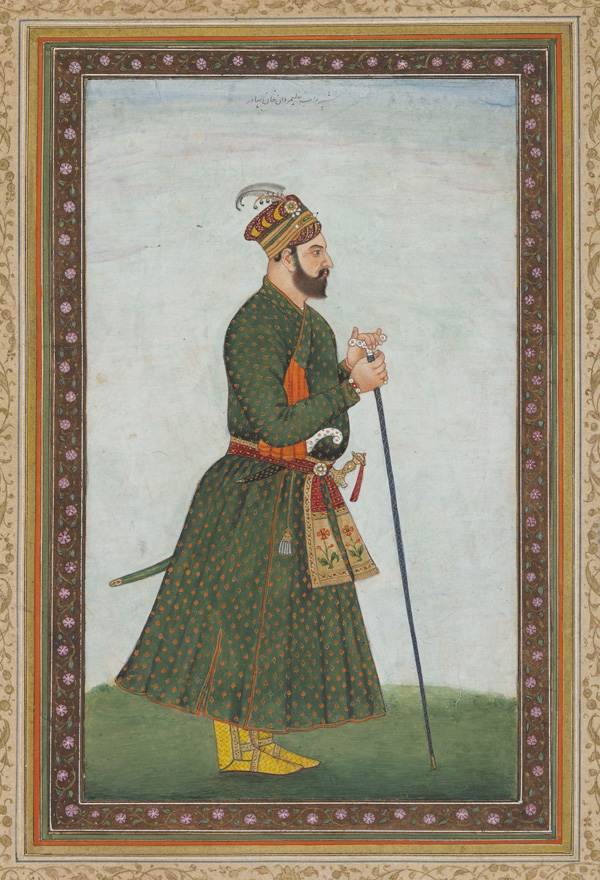
Forgotten Shia General Ali Mardan Khan

Image result for ali mardan khan kashmir


Dr.Mazhar Naqvi

The role played by Amir- Ul- Umra, All Mardan Khan in promoting the cause of ‘Hussainiyat’ has so far remained out of the gaze of history of Azadari in India.In Shahjahan's reign, he played an influential role in propagation of  philosophy behind ‘Karbala Revolution’ in Kashmir valley despite hostile atmosphere. His father, Ganj All Khan Zig of a Kurdish tribe, was close to Shah Abbas, the ruler of Persia (Modern Iran). He served as Governor of Kirman for over thirty decades.

After his death, Shah Abbas appointed his son, Ali Mardan Khan as his
Successor in Qandahar. After Shah Abbas’s departure for heavenly abode Mardan felt his future uncertain as his enemies and he surrendered in 1637-38, fort of Qandahar to Shahjahan's and joined his court at Lahore. He was given a mansab of 6000/6000.His 10 servants also received appropriate positions. Mardan was made governor of Kashmir. In 1639-40, he was given the additional charge of Punjab. He also led expeditions for capture of the Balkh and Badakhshan. In Kashmir, Mughal General Mardan constructed many canals, gardens and palaces.He also laid a garden was laid out on high ground.

During his second term as governor of Kashmir, he erected several water channels and fountains made. Mardan also erected a big garden in the  village Til with four stone walls. A large channel brought water from the back of the mountains to irrigate the garden. He gave the income from the fruit of the gardens for expenditure on Imam Raza’s tomb in Mashhad in Iran. In the middle of the Pir Panjal, he constructed a caravanserai in the name of the twelve Imams. At the exit of the Baramula pass he founded two villages and named a village after Hazrat Ali’s name. Ali Mardan died in 1656-57.

Source: Internet/Photo Courtesy Google images

Devotee of Holy Imams -Mughal General Mahabat Khan


Image result for grave of mahabat khan

Dr.Mazhar Naqvi

Zamana Beg Mahabat Khan Khan-i Khanan had, by a coup de main, seized Jahangir was a Shia by faith. He is the only Shia who captured the royal couple of Jahangir and Nurjahan for about six months.He lies buried at Dargah Shah-E-Mardan in New Delhi.He was a formidable General who took under captivity the royal couple while they were crossing Jhelum river and enjoyed regal favor under the regime of Shahjahan, a rare feat indeed.   

Mahabat Khan’s ancestors had descended from Imam Raza,8th Shia Imam. His father Ghayur Beg had relocated from Shiraz to Kabul. Initially, Mahabat Khan did not exhibit his faith publicly due tohostile attitude of Mughal emperors but later on, he openly started professing his faith. He had costly jewels engraved with the names of the twelve Imams and wore them round his neck. He also placed on his head a costly woolen scarf embroidered with their names.
The General was in the habit of waiving of all debts ,irrespective of the amount involved if the defaulter swore in the name of holy Imams that he had no means to pay back debt.

Source: internet/Photo Courtesy Google images

Thursday, 16 January 2020

Marsiya Writers before Anees & Dabeer


Dr. Mahar Naqvi
The incredible popularity given by Mir Anees and Mirza Dabir to Marsiya writing and recitation prompts one to believe as if there were no composers of elegiac poetry on ‘Karbala Revolution’.As a result, a large number of Marsiya reciters and composers remain unknown to Muharram mourners.   
For example, no one seems to be aware of the existence of a famous Marsiya reciter Shaykh Sultan. He belonged to the eastern part of Uttar Pradesh, most probably Ghazipur and garnered  mastery over his contemporaries in the royal curt of Delhi. Sultan used to recited Marsiyas eloquently with style. His voice was sensitive, deep and full of sorrow. Although he had no formal training in music yet he captivated the mourners with his tunes befitting for paying tribute to the martyrs. The mourners always responded to his presentation with wailing and grief.
Likewise, Mir Abu Turab and Mirza Ibrahim were also gifted Marsiya reciters of their era. Another was, Mir Darvish Husain who too enjoyed considerable popularity among mourners. In the declining days of Mughal empire, Mir Abdullah also emerged as an excellent marsiyago. A barber by profession, Jani developed taste for Marsiya reciting and soon earned much popularity. He was quite handsome with good command over music. An affluent landlord lavished Jani with costly gifts worth Rs. 1 lakh but he squandered money on extravagance. 
Next worth mentioning name is that of Muhammad Nadim. He was expert in selecting nerve-raking phrases and used most appropriate metaphors in his compositions. At times, He liberally used Marsiyas written by others in his    stanzas in an unusual manner. In 1803 one of Mir Abdullah Miskin's poems was printed in Nagri characters. Gilchrist has quoted Miskin's verses in his Hindustani Grammar,published in 1796. Garcin de Tassy translated some of them into French.
Another poet Khalifa Muhammad All Ghlasi, adopted  Sikandar as his
nom de plume(Takhallus). He hailed from Punjab but rsettled in Delhi. He was not mu educated but still his Marsiyas were free from linguistic pitfalls. His popularity did not fade despite refinements I the art of  Marsiya writing.
In the second half of the 18th century, names of several other many  Marsiya poets also figure.They included Mir Sayed Muhammad Taqi, alias Mir
Ghasi, Qiyamud-Din Qaim Chandpuri, Mirza All Qui! Khan Nadim Dehalvi, Banda  Ali Khan Lakhnavi, Mir Amani Dehalvi, Mirza Zuher
Khaliq Dehalvi, Shah Nuruf l-Haqq Tapan Azimabadi, Shah Mu-hammad Abul Hasan Fard Azimabadi, Qalandar Bakhsh Jurrat Dehalvi, Sheikh Ghulam Hamadani Mushafi, Ghulam Ali Rasikh Azimabadi, Ahmad Beg Qizilbash Dehalvi, Sadiq All Shah Haideri Farrukhabadi, Khwaja Ihsanullah Bayan Dehalvi, Mirza Muhammad Ismail alias Mirza Jan Tapish Dehalvi, Shah Zahurul-Haq Azimabadi, Qasim Lakhnavi, Ghulam Ghaus Khan Ehsan and Mazhar Mushtaq, Shani Azimabadi, Mahzun Azimabadi, Maulvi Jawwad All Azimabadi and Zahik.
Their names suggest that most of them were either from Delhi or Azimabad(Now Patna).Lucknow too had several prominent Marsiya writers. Another feature is that a number of them were Sunnis, indicating poets did not believe in Shia-Sunni ideological conflict and kept away martyrs from their own ideology or faith. These Marsiya writers enriched the Urdu literature and refined both Marsiya writing and presentation.
Source: Available on request