Friday, 17 November 2017

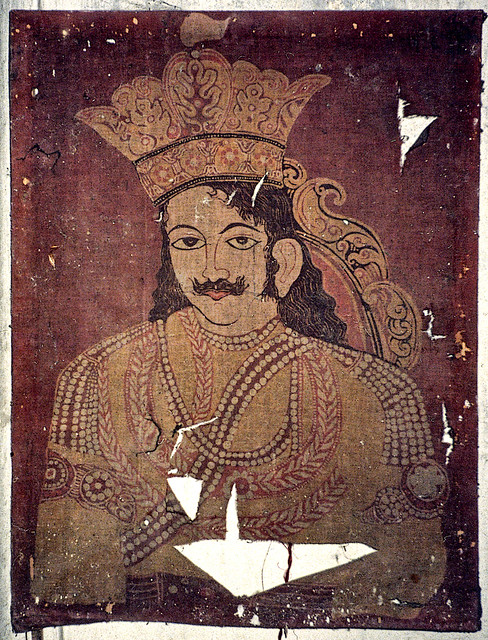
Nawab Alivardi Khan- Bengal's Great Azadar


Nawab Alivardi Khan  


Dr.Mazhar Naqvi
Nawab AliVardi Khan deserves to be remembered as a great patron of Muharram mourning related rituals in 18th century Bengal. It is unfortunate that he is mostly remembered as an able ruler, s brilliant administrator and his dedication in re-building the war-torn towns and villages of his kingdom  even under the constant shadow of enemy invasions.However, he needs to be acknowledged as a   great azadar as well,for he made gallant efforts to promote muharram ceremonies despite pitted against heavy odds throughout his 16 year old regime.it was his inspiration that had turned his maternal grandson Siraj-Ud-Daula into a great admirer of martyrs of Karbala.Had Siraj not lost Battle of Plassey in 1757, the political history of India would have been altogether different.His defeat led to establishment of colonial rule in India and the British used all sorts of tactics to reduce the participation of hindus in Muharram processions.They were apprehensive of the large scale  participation of people from all walks of life in Muharram rituals and always considered assemblies of devotees as a potential threat to their empire.It is the outcome of British policy that splendour and grandeur once associated with Muharram ceremonies during the rule of Alivardi Khan are no longer visible in Bengal in the present era.      
Born in 1671, Alivardi Khan was Nawab of Bengal during 1740–1756.He was the son of Mirza Muhammad Madani, who served Azam Shah, the son of the  Mughal Emperor  Aurangzeb. His mother was a descent of the Turkish tribe of Afshar.Historians assert that his reignof 16 years was mostly engaged in various wars yet he paid equal attention to propagation of Muharram ceremonies. He even invited scholars from Iran to deliver lectures on the philosophy of Imam Hussain to create awareness about his sacrifice among his subjects. Alivardi also encouraged Murshidabad style of painting. An exceptionally ambitious painting produced by this school represents the climax of the Muharram festival by night in the old wooden Imambara at Murshidabad and includes the central mosque or Madina, the only part of the structure to survive a disastrous fire in 1846.The Tazias  have been deposited in the central Madina and the standards in the surrounding arcades, after they had been taken in procession through the streets. The artist has successfully pictured the brilliant illuminations with light from the candelabra, lamps and girandoles reflected in mirrors and the pieces of glass sewn into the black hangings. Like the durbar scene it is depicted from the artist’s viewpoint on the ground but without the excessive elongation of the figures.  A contemporary historian Ghulam Hussein Salim has eulogized Alivardi Khan as an avid patron of art and culture.
Alivardi breathed his last on april 9,1756 at the age of 80 or so. Before leaving for his heavenly abode, Nawab was able to firmly established Muharram ceremonies in Bengal. Alivardi lies buried in Khushbagh in Murshidabad.His grandson from daughter’s side, Siraj- Ud- Daula succeeded him in April 1756 at the age of 23.Despite his short life , Siraj also proved to be a worthy successor of Alivardi Khan as a great Hussaini.He is credited with reerection of Murshidabad Imambara too.  (References available on request. Photo Courtesy Google Images )


Thursday, 16 November 2017

Hussaini Sufi Shah Yusuf Gardezi of Multan


Beautiful Exterior of Shah Gardez Shrine-Multan


Dr.Mazhar Naqvi 
Multan is a historic city of Pakistan. It is also last resting place of many a Sufis. The shrine of  Muhammad Shah Yusuf Gardezi, commonly known as Shah Gardez, holds a special place in the heart of Imamis, for he is believed to have brought with him teachings of Masoomeen from Gardez in Afghanistan to Multan. He travelled  from Gardez to Multan on a lion and preached true teachings of Islam.
A large number of people embraced Islam under the  influence of his teachings based on the sayings of Aale-Muhammad (Progeny of the Holy Prophet).A number of miracles are also attributed to him and they find place in the contemporary historical accounts.
The legend reveals that Shah Gardez arrived in Multan  over nine hundred years ago, riding on a lion with a live snake for a whip and a pair of pigeons fluttering over his head. Since then, his descendants and the pigeon's descendants have multiplied exceedingly. Saint’s descendants are known as Gardezis and considered to be one of the few noble families of Indo-Pak sub-continent.
The shrine of Shah Gardezi is situated inside the Bohar Gate. It is a rectangular dome less building decorated with glazed tiles. The historian Arnold J.Toynbee in his book "Between Oxus and Jumna"has written about the beautiful shrine, saying “ the tomb under whose shadow I am now writing ... is the tomb of Shah Yousaf Gardezi. I am being entertained in the Gardezi family's 'Dewan-Khanah', their family guest house, and the tomb, with the tombs of the saints’ descendants clustering round it, is only a stone's-throw away. Being named Joseph, I (like Stalin) am this saint's namesake, but I cannot claim also to be a 'Shah'; for 'Shah' signifies a Syed: that is to say, a descendant of the Prophet Muhammad.”
The tomb is cased in blue tiles, dating from the reign of Mughal Emperor Humayun, and at intervals there are apertures in the tile works, opening into cavities specially provided to give the pigeons a lodging as close as possible to the spot where the saint's body lies. It is a pretty sight to see them poking in and out, for the entire world as if the tomb has been built solely for their benefits. The pigeons flutter here below. The shrine complex becomes a hub of Muharram related rituals during Ayam-e-Aza. Most of Muharram processions either originate or culminate from Gardezi complex. People throughout the year throng the complex to see the shrine of Shah Gardez who was not just a descendant of the Holy Prophet but also a man blessed with an exemplary desire to convey the message of Karbala revolution to people at large.(References available on request.Photo courtesy Google Images)      


Saturday, 11 November 2017

Death of Shahid Hussain 'Phuppa'-A Great Loss of Imamis


A Recent Photo of Shahid Hussain Phuppa   
Dr.Mazhar Naqvi

In the death of Shahid Hussain, Imamis have not only lost a great azadar but also a man who excelled in the difficult art of devising tunes for ‘Nauhas’. His absence was felt by one and all when Anjuman-Raza-e-Islam recited Nauhas during the observance of Chehlum at Gwaltoli Karbala in Kanpur. Members of Raza-e-Islam missed him badly following his pivotal role in making Anjuman as a favourite of Azadars in the past two decades. Fondly called as ‘Phuppa’ by elderly and children alike in view of his compatibility with the people of all age groups, Shahid Sahib had breathed his last on November 4 after remaining in Intensive Care Unit (ICU) of a prominent hospital for over a month. He was rushed to the hospital after he was found lying in an unconscious state at his residence on 4th of Muharram.
Born on March 20,1940 in Haidergarh  town of district Barabanki as eldest son of Marhoom Sadiq Hussain and Marhooma Muneer Begum Jafri, Shahid Sahib spent his childhood with his maternal grandfather Late Tajammul Hussain who owned considerable property in Musahaibganj area of Lucknow. He shifted to Kanpur when his father opened a tailoring shop in Souterganj area. Being a man of creativity, he not only helped his father at the shop but also joined Anjuman Jafaria of Gwaltoli as its active member. Despite passing only matriculation, he earned a job in Ordnance Parachute Factory (OPF) of Government of India due to his creativity. After getting married to Mohtarma Nazneen Begum, he lived in a rented house near Gwaltoli but shifted permanently to Nawab Sahib Ka Hata in Patkapur. His commitment to duty fetched him national awards from Ministry of Defence.
Shahid Sahib struck a fine balance between his job and interests. He was an excellent kite flier and designer.In the company of another kite maker Imamuddin alias Miyan , he had designed a kite in the shape of a full grown man. Hundreds of people thronged to see the kite when it was seen flying in the sky. The city had remained buzzed with the description of manlike kite for several weeks.
Like a true azadar, he used to leave his all other interests and time pass activities a few days before the sighting of Muharram crescent. He used to prepare Zari, Alams, Jhula and Patkas for his Azakhana himself. From Chaandraat onwards, he used to dedicate himself to Nauhakhwani. He recited Nauhas along with stalwarts of Anjuman-e-Rizviya  like Arif Hussain Abbu Sahib, Anwar Sajjad Sahib, Salmi Sahib, Qasim Hussain Sahib , Acche Bhai, Askari Sahib , Sajid Bhai, Akhtar Bhaiya, Laddan Chaudhary Sahib. He left Rizviya when Raza-e-Islam came into existence in 1992.Shahid Phuppa made an extra-ordinary effort to establish new Anjuman along with others. He skipped work to concentrate on tuning Nauhas for prominent processions and Shabbedaris. His efforts yielded positive result as Raza-e-Islam shot into fame in the year of its inception only. Tunes of Nauhas set by Phuppa like “Ham Dile Fatima Zahra ki Tamanna Ban Kar, Cha Gaye Sare Zamane Mein Ujala Bankar” –“ Dil Ko Gham-e- Hussain Ka Jada Bana diya “ brought acclamation to newly formed Anjuman from various quarters of azadar world.             
After Ashura, he used to immerse himself in devising tunes for Nauhas received by anjuman for historic Tarahi Shabbedaris, Chehlum and 8th Rabi Ul Awwal processions. He encouraged his younger son Sharad Sahib  to recite Nauhas and now he also acts as Sahab-e-Bayaz under the watchful eyes of his senior Janab Salmi Sahib. His daughter Mrs. Sona  is also a famous for her Nauhakhwani. His eldest son Janab Romin  runs his own institute and a famed artist. Phuppa’s wife too has spent her life in preservation and promotion of Azadari with the active support of her daughters Honey and Huma. His youngest son Kumail also takes keen interest in the affairs of Anjuman. Due to exemplary love and affection of Phuppa and his entire family for martyrs of Karbala, his death left the entire Imami community bereaved. Hundreds of people turned up to attend his funeral at Nawabganj Badi Karbala.    
With Ayam-E-Aza still going on, Phuppa is being missed by those acquainted with finer points of Nauhakhwani. Noted Sahab-e-Bayaz Salmi Sahib told the blogger that Nauha is one of the important branches of Karbala literature. Its proper rendering instantly touch the heart and head of listeners. The one who sets tune of Nauha has to keep it in mind that its rhythm does not sound like a song. The recite has to also keep this distinction while presenting Nauha, for singing is prohibited in Islam. But Nauhakhwani cannot be rendered flatly as audience won’t relish it in the absence of emotions. Salmi Sahib who remained in constant touch with Phuppa after formation of Raza-e- Islam said ‘His death is an irreparable loss. He knew the intricacies of Nauhakhwani and took great pain in devising mournful tunes having no resemblance with songs. Phuppa had even capacity to infuse pathos into the intonations of voice while reciting a Nauha despite the fact that he mostly assisted Sahib-E-Bayaz of Anjumans as ‘Bazu’. The void created by his death would take a long time to fill.” The blogger prays for his ’Maghfirat’ , seeking invocation of Mazlum-E-Karbala and the Awaited Imam.(The article is based on the personal information of the blogger, inputs given by his sons. Photo of Marhoom too has been sent by his eldest son Romin Sahib)

.


Wednesday, 8 November 2017

Karbala Poetry by Nawab Wajid Ali Shah


Nawab Wajid Ali Shah in a rare painting 

Dr.Mazhar Naqvi
His “temper is capricious and fickle, his days and nights are passed in the female apartments and he appears to have resigned himself to debauchery, dissipation and low pursuits”. This is how the British have portrayed Nawab Wajid Ali Shah-the last ruler of Awadh kingdom. What the British did to assassinate character of Wajid Ali to annex his kingdom, Independent India too has been following the suit. A Delhi based company has named an aphrodisiac after him and successfully selling it for over three decades. The wrong done to Nawab Wajid Ali needs to be corrected, for he was a great worshipper and azadar who always strived to live in accordance with code of conduct prescribed by Islam. Shah was a creative, difficult and interesting person. He started taking keen interested in poetry and other forms of art after the British did not allow him to run his kingdom firmly and finally dethroned him in 1856 on the charge of ill-governance. He spent his last days in Calcutta(now Kolkata) with sheer number of followers cramped into his premises, however, gave some impression of pomp—the grounds hosted over 7,000 people, household guards, and dozens of disgruntled begums, not to speak of a menagerie of monkeys, bears, and 18,000 pigeons.
In his small state in Matiyaburj locality, Shah built an imposing Imambara and mosque where he offered his prayers regularly. He used to compose elegiac poetry while covering the distance between his palace and mosque or Imambara. While there is no dearth of material portraying Shah as a womanizer and man of low character, little effort has been made to his contribution to elegiac poetry and emergence of composite culture in his kingdom. The  book published  by National Council for Promotion of Urdu Language, New Delhi on literary contribution of Shah has spared only three out of almost 700 pages to his marsiya and Nauha writing. This has been done despite admission of the fact that Shah was a poet of caliber and his elegiac poetry was comparable to great poets of his era.
For example, see Kalam of Shah on Janab-e-Sakina, the little daughter of Imam Hussain :
“Bano ne Kaha Main Tere Qurban Sakina
Khol Ankhon ko Aur Baap ko Pahchan Sakina
Do bunde jo the Kano Mein Hilte the Tab  
Takti thi har ek chehre ko anjan Sakina
Baiyat ka bahan tha faqat qatl tha manzur
Shabbir pe para bahistaan hai Sakina “
Similarly Shah remembers the plight of survivors after the martyrdom of Imam Hussain :
“Karbala mein jab ghari Shaam e Ghareeban ho chuki
Aur sahar manind zulf shab e pareshan  ho chuki   
Kokab e Zahra pe jab abre shahadat cha gaya
Chandni maili hui aur dhoop uryan ho chuki
Aftab e deen gahan mein aa gaya hai hai
Roshni teri bas ab mahe taban ho chuki  
Ansuon ko silsila baqi rahe aie doston
Binte Zahra Shaam mein Majuse Zindan ho chuki”
 Shah’s marsiya writing has been criticized on two counts. He wrote marsiyas in hurry and as a result compromised with quality on certain occasions. Secondly, he did not pay much attention on the opening of his marsiya known as chehra(face).So his marsiyas fail to catch attention the way writing of other eminent poets does. However, such shortcomings don’t belittle Shah as marsiya writer in the backdrop of what he suffered in his life and adversely affected his writing.
Shah was a generous man. He not only wrote elegiac poetry but also patronized poets and artists. He held in high esteem Marsiyanigars, Sozkhwans, Nauhakhwans and Azadar-e-Imam. He offered rewards to them and praised marsiya writers and reciters in these words :   
“Kya kahne jo marsiya kahe hain
Jo marsiyakhwan hai parh rahe hain
Mazmoon bhi bandish bhi maqool
Beshubah ye marsiya hai maqbool
Dee haq ne ye tabanhfaiz buniyad
Shagird  jo ho wahi hai ustad
Alam mein jo ye Sukhan na hota
Mumtaz kabhi ye fan na hota “ ,  

 Born in 1822, he wore his hair in ringlets and dressed in robes. He succeeded to the throne of Awadh in 1847, a state carved out of the crumbling Mughal empire, Less than a decade after he was told in 1856 that his kingdom would be absorbed into British territory, the Shah cried, “Why have I deserved this? What (crime) have I committed?” There was no clear answer, but one hint lies in the fact that the East India Company owed him large amounts in debt. Why bother repaying a loan when liquidating your moneylender was a more comfortable option? This is how he had to leave Lucknow and settle at Calcutta, leaving him a depressed and isolated man. But he did not forget martyrs of Karbala in the most trying circumstances and did much to promotion of Azadari in his new abode. A leading Zakir-e-Ahlebait recently dubbed all the rulers of Awadh as womanizers. He should have not done so, for his own forefathers had enjoyed patronage of Nawabs when they embarked upon the mission to turn Azadari in mass revolution in Awadh. As a scholar of international repute, he should see the passion of Nawabs for Azadari and not their private lives that have been portrayed with lies by the British authors. More so,no disrespect should be shown to someone who died in 1887 and Islam is avedrse to such utterance.(References available on request. Photo courtesy Google Images)

Saturday, 4 November 2017

Shreya Ghoshal and Lata Mangeshkar's Marsiyakhwani


Shreya Engrossed in Rendering Marsiya in Black Attire

Dr.Mazhar Naqvi

Shreya Ghoshal, the most popular Indian playback singer, has completed a task by reciting a marsiya written on Hazrat Zainab. Decades ago, Lata Mangeshkar, the melody queen of India, had lent her voice to a marsiya written by Mir Anees  about the departure of Hazrat Imam Hussain towards battle field at Karbala. The recipient of India’s highest civilian award Bharat Ratna, Lata Sahiba had recited marsiya in a voice choked with pain and emotion. Inspired by the sublime sacrifice of Imam Hussain, she literally sang her heart out to let the listeners know and listeners realize how the grandson of the holy Prophet was helpless after sacrificing everything for the sake of Islam. Even today, a devotee breaks down the moment he listens Lata Sahiba’s voice rendering the following lines of great Mir Anees -

“Hussain jab ke chale baad-i-dopahar ran ko
Na tha koi jo thamay rakaab-i-tausan ko
 Sakeena jhaad rahin thi abaa ke daaman ko
Hussain chupke khade the jhukaye gardan ko
 Na aasraa tha koiShah-e-Karbalaai ko
Faqat behen ne kiya tha sawaar bhai ko”


After Lata Sahiba, no other female playback singer lent her voice to any other marsiya. It was a sort of vacuum from the point of view of Karbala revolution. An admirer of Imam Hussain knows if Imam Hussain was martyr of Karbala , his sister Hazrat Zainab was messenger of  revolution. It was Hazrat Zainab who did not allow Ummayad regime to suppress the tragedy of Karbala. Despite pitted against heavy odds, Hazrat Zainab not only saved the ailing son of her brother, consoled the survivors but also delivered sermons in Kufa and Damascus fearlessly to expose the lies being spread by Yazid and his supporters about Imam Hussain and progeny of the Holy Prophet. It was she who mourned the death of martyrs by holding a Majlis in Damascus after release from prison. The tradition started by her has assumed global proportions and Azadari rituals are observed across the world.

She loved her brother unconditionally. She would have died after killing of her brother. She  survived the tragedy  just to propagate message of her brother and expose falsehood in the name of Islam. She was brave daughter of Allah’s Lion Hazrat Ali and also spoke like him. Imam Hussain and Hazrat Zainab were unforgettable twins of Karbala. It was always felt that like Lata’s marsiya about Imam Hussain, similar tribute should be paid to Hazrat Zainab. This task was completed by Shreya Ghoshal   recently when she recited a marsiya depicting scene of ‘Shaam-e-Ghareeban’ (Evening mourned for the atrocities committed by Yazidi commanders after the martyrdom of Imam Hussain and his companions).Like her illustrious predecessor, Shreya too focused on the emotions while lending her voice. Her voice leaves the listener spellbound and propels him to shed tears on the plight of Hazrat Zainab and removal of carpet from under the ailing body of Imam Sajjad. She has aptly portrayed the scene of Shaam-e-Ghareeban and her voice catches attention when she begins :

“masnad luti jo shahe falak ke bargaah ki
haatho se dil ko tham ke zainab ne aah ki
ul tha kaha chhipe nahi jaahe panah ki
fariyad hain, duhayi hai sher e alah ki
aaka tumhari ahal e haram lute jaate hai
yaa sher e haq bachav ke hum lute jaate hai”


By her effort, she has completed what was unfinished for years. Shreya is a worthy successor of Lata Sahiba. Born on March 12, 1984, Shreya has achieved a lot in a span of short time. Since marsiya for Imam Hussain was rendered by Lata Sahiba, the destiny took its own time to select Shreya for elegiac tribute to Hazrat Zainab. Those acquainted with Azadari knows very well that it is Bibi Fatima, mother of Imam Hussain and Hazrat Zainab, who decides who would recall martyrdom of her son and pay tribute to martyrs and survivors of Karbala. Hussain is martyr of humanity and he is above caste, creed and religion. He is held in esteem by Muslims and non-Muslims alike. For centuries, non-Muslims have remembered and mourned his martyrdom through Poetry, Prose , Soz, Salams and Nauhas. Shreya deserves praise for keeping the tradition alive. Bibi Fatima has blessed her as well, for she herself has stated that the marsiya has given her amazing popularity all over the world.9references available on request. Photo courtesy Google Images) 

Thursday, 2 November 2017

Forgotten Marsiya Writer-Bazm Affendi

A Rare Photograph of Bazm Affendi


Dr.Mazhar Naqvi

"Ye Wo Hain Jinki Zamane Mein Aza Hoti Hai
Raat Din Jinke Liye Khalq-e- Khuda Roti Hai"

Bazm Affendi, the writer of the above two lines dedicated to Janab-E- Aun-O-Muhammad, is also a forgotten marsiya writer. Much is not known about him even though his son Najm Affendi was a well known marsiya writer and his grandson, Late Suhail Affendi ranks among the finest Zakir-E-Ahlebait India has ever produced. Suhail Sahib was also a marsiya writer of eminence himself but he always remained more inclined towards oratory. Najm Affendi’s status as a marsiya writer could be gauged from the fact that Shair-e-Inquilab, Josh Malihabadi, had mourned his death and described his departure from the world as a great loss to the literary world. It is stated that once even Suhail Sahib had talked about his  grandfather’s marsiyas but thereafter he never discussed Bazm Sahib publicly.
Since Najm Affendi had migrated to Pakistan and Suhail Sahib remained too preoccupied with Zakiri(Oratory), Marsiyas written by Bazm Affendi remained untraceable. Majority of people forgot him as well his marsiyas in due course of time. As a result, Bazm remains stranger to modern Azadars despite producing elegiac poetry of highest standard. Thanks to research carried out by Janab Baqar Zaidi, 30 marsiyas of Bazm Sahib are now available. It is evident from the traced marsiyas that Bazm was influenced by Mirza Dabeer and he paid maximum attention to the opening of his marsiya to gain instant attention from listeners. Apart from Imam Hussain and Hazrat abbas, he also wrote marsiyas on martyrdom of Janab-E-Hur, Habeeb Ibne Mazahir, Hazrat Ali Akbar and Janab-E-Aun-O-Muhammad. His language is simple but conveys forcefully sentiments of the poet.        

The research on Bazm Sahib reveals that he was born at Agra and named as Mirza Ashiq Hussain in 1860 AD. He adopted Bazm as his pen name and moved to Hyderabad where he breathed his last in 1953.From the quality of his marsiyas, it can easily be concluded that he must have composed hundreds of marsiyas. It is ironical that most of his work is not available. It is grave injustice to Bazm and a befitting tribute can be paid to him by making a fresh start to locate his Kalam the way Janab Baqar Zaidi has done.(Reference available on request.Photo Courtesy Google Images) 

Wednesday, 1 November 2017

Prophet's Footprint in Utter Neglect in Rampur

Bainazir Palace [Rampur]

An Old Photograph of Kothi Benazir in Its heydays.Qadam Shareef
is no longer visible from Kothi Now . 

Dr.Mazhar Naqvi

The little known Qadam Shareef (Shrine with footprints of the Holy Prophet Hazrat Muhammad (PBUH) in Rampur City continues to be in a ruinous condition. Offered as a gift to Nawab of Rampur State by a royal Arab in later 19th century, the shrine even does not have proper accessibility and road leading to Qadam Shareef  is full of potholes. It would be wrong to assume that the local Muslims are not perturbed over the pathetic condition of the holy shrine. In the past few months, they have been regularly staging demonstrations and moved representations to authorities but efforts have yet to evoke any positive response.
Much was expected during the regime of Samajvadi Party regime. As Azam Khan the second most powerful man in Akhilesh Yadav government hails from Rampur only. Moreover, he had initiated construction work at large scale for completion of his dream project ‘Jauhar University’. He also held important portfolios but never took interest in the renovation of shrine-probably the third of its kind in entire Uttar Pradesh province of India after Lucknow and Khairabad. Sandila too has a Qadam Shareef but in miniature form. It still remains a mystery as to why Azam Khan , an influential Muslim leader and a staunch critic of former Nawabs of Rampur, preferred to ignore sentiments of devotees who visit in hundreds the shrine every Thursday despite its dilapidated condition.
As recently as in October 2017, devotees staged a vociferous dharna for renovation of shrine but no action has been taken so far. Muslims are now openly saying in Rampur “why should we expect anything from a Chief Minister known for his anti-Muslim stance? When a Muslim leader of Azam Khan’s stature turned blind eye to a shrine dedicated to the holiest personality of Islam we have no right to criticize anyone else. May Allah forgive them for giving prudence to politics over their religious duty.” told a friend of blogger on phone.  
History reveals that the blessed footprint had arrived in Rampur from Arabia about 144 years ago. It was  installed with customary celebrations on March 10,1873 near Kothi Benazir- the summer palace of Rampur Nawabs. It was kept under a canopy with beautifully carved white ‘Jalees’ around. The state had also given 200 acres of land for the upkeep of shrine.There are no dearth of people who opine that the powerful minister did not take any interest in the development of shrine as his university has allegedly grabbed land belonging to Qadam Shareef. Minister however denies the charge but people still remain unconvinced in view of his lack of interest towards shrine.

File:Kothi Khas Bagh.jpg
Kothi-Just a shadow of glorious past

 After merger of Rampur with Indian Union and numerous litigations among members of Nawab family, almost all major buildings suffered greatly. Only Hamid Manzil being headquarters of Raza library and under the control of Central Government is well-maintained. Kothi Benazir too is shadow of its glorious past. It is too in a state of decay and so is Qadam Shareef being its ‘poor’ neighbor. Like other historic buildings of Rampur, Qadam Shareef also needs immediate attention, for there are not too many footprints of the Holy Prophet on Indian soil. Moreover, its renovation is not going to cost much being a small structure. A local journalist Janab Farasat Ali has been writing regularly for construction of road connecting main road to shrine. May Allah grant success to his efforts.Ameen.The article is based on the inputs provided by  blogger’s friends in Rampur and brief mention of the shrine in a few articles. Photo courtesy google images)