Sunday, 6 March 2016

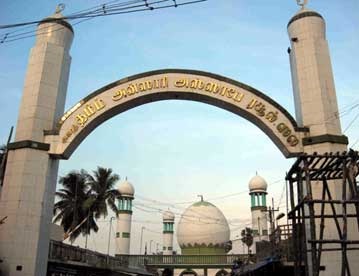
Shrine of Prophet's Companion in India


Shrine of Hazrat Tameem Ansari

Dr.Mazhar Naqvi

India is also last resting place of Sahabas (Companions of the Holy Prophet).This fact is however not much highlighted even though these Sahabas are much revered and lie buried in majestic shrines. The most famous among shrines of such companions is of  Hazrat Tameem Ansari. His tomb(Dargah) is located in Kovalam  near Mamallapuram, about 30 kms from Chennai. The shrine attracts devotees from various parts of India and Urs of Hazrat Tameem is celebrated with much enthusiasm.
Born in Medina Munawara, Hazrat Tameem  embraced islam in  Makka before the migration(Hijrat) of the Prophet. He belonged to the tribe of Al-Kajraj and name of his father was Yu-Aar. He is  one among 313 Sahabas who had taken part in the battle of Badr. He stayed in the world of Jinns (Alam-ul-Jinn) to teach them about Islam for five years under the command of Nabi Kareem. After directing him to visit Jinns, the Holy Prophet had  gifted him a sacred ring bearing "Asma-ul-Zalzalooth". The Prophet also told him that the ring would be on his  finger till the day of Judgment (Qayamat) and he will meet Nabi Kareem with the relic in Maidan-E-Mahshar.
He moved to Sindh after the death of Holy Prophet and remained there for 18 years. Before his Parda (Wisal), he instructed his disciples to cast his Janaza (remains) into the sea after his death. His devotees carried out his instructions and it s stated that his Janaza remained in the sea for about 5 years with big fishes  guarding it. Eventually, one large fish brought the remains nearer to sea shore of Kovalam where he was laid to rest. Another legend says that Nawab Muhammad Saadat-Ullah Khan of Wallajah saw Hazrat Tameem in a dream. The companion asked Nawab to    proceed to Kovalam and told him the dream that he would find his remains there. Hazrat also instructed him to ensure burial of his remains. As directed in the dream, Nawab rushed to Kovalam where he found a coffin. Upon opening it, he saw the sacred body  along with some documents, revealing that  that Hazrat was a great companion.

The Nawab arranged his burial and those who attended the funeral ceremony noticed divine light reflecting from the face of Hazrat Tameem. Freshness of his sacred body not only touched the hearts of all those present with Nawab Wallajah but also proved to them the exalted status of true companions of the Holy Prophet. Later, Nawab also built a beautiful Dargah over his grave. Since then, it has been a popular center of pilgrimage.(References available on request-Photo Courtesy Google Images).


Holy Grave of Hazrat Syedna Tameem Ansari 

Tuesday, 1 March 2016

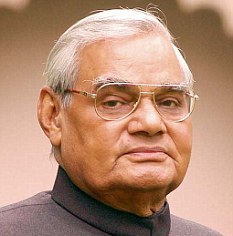
Imam Hussain and Atal Bihari Vajpayee


BJP Leader &Ex- Indian PM Atal Bihari Vajpayee

Dr.Mazhar Naqvi
Muharram Mirror is primarily a blog dedicated to Hussaini Ideology, Muharram rituals, Sufism and Islamic Heritage. Of late, some Hindu fanatics have started targeting the blog in view of its mission to preserve and promote the Hussaini Mission. Despite being reminded repeatedly, they refuse to consider Imam Hussain as martyr of humanity. In response to appeals made to them to look at the noble character of Imam Hussain and his sublime sacrifice, they are using perhaps for the first time vulgar language against Imam Mazloom. Being Muslim I can’t reproduce the non-sense uttered by them but the same can be viewed on blog Bharat Mahan. As slanderers of Imam Hussain are open supporters of BJP, Shiv Sena and Hindu Mahasabha, I am producing below the statement of Atal Bihari Vajpayee ji about Imam Hussain. He had stated “My own parliamentary constituency is Lucknow, which is one of the holy centers of Shia tradition in India. Since the days of my youth, the Muharram processions have made a profound impression on me. I was moved by the story of the supreme sacrifice of Imam Hussain at Karbala.”
He further said “since its Independence in 1947, India has travelled a long way on the road to progress. We can take satisfaction at the growth of our infrastructure, the great strides we have taken in agriculture & industry, and in our advances in education, science and technology. We are acutely aware that colonialism and economic exploitation had ensured our backwardness mainly through a denial of the opportunity for scientific and technological advancement. Today, India is at the forefront of the knowledge revolution. We are determined that we will never again fall behind in scientific research and technological achievement. Our experience and skills in these areas are also available to our friends through technical co-operation programs for peaceful socio-economic development. Of course, we know that much still remains to be done to fulfill the ideal of Mahatma Gandhi: to wipe every tear from every eye.  India is a land of many faiths. Our belief in secularism is rooted in a tradition which fundamentally respects man’s spiritual quest and his freedom to pursue it in the manner in which he chooses to do so. There may be some occasional aberrations, but neither the State nor civil society would ever weaken its bond with secular values, which are inherent in our civilization and cultural inheritance.”
Similarly, I would like to highlight a Shiv Sena activist Ashok Tamhankar who has been erecting a Sabeel(Drinking water arrangement) for 12 years on Ashura day in Mumbai. He says “I share the pain and grief of my Imami brothers and join them in mourning," with party’s local Shakha Pramukh Dilip Sawant nodding with approval.

I am sure that the words of Atal Ji who is held in high esteem by one and all and remarks made by a Shiv Sena activist would surely prevent Hindu fanatics from making vulgar remarks at Imam Hussain. They should remember that Imam Hussain had laid down his life for protection of human values, uprooting falsehood and corrupt regime. Hindus have loved him for centuries and continues to do so even today.(Reference: Atal ji had made the statement during his Iran visit as Prime Minister of India)   

Monday, 29 February 2016

Azadar Begum Saleha Naqvi of Kanpur


Maulana Shameeul Hasan Addressing Majlis-E-Aza in Kanpur
Dr.Mazhar Naqvi
Majlis-E-Chehlum of social activist and co-founder of Anjuman Kaneezan-E-Syeda Begum Saleha Naqvi in Kanpur yesterday once again proved Hussaini Ideology as a perfect solution to problems confronting the 21st century world. Hundreds of people from various parts of the Uttar Pradesh and professing different faiths converged at Mehdi Hall to attend her Chehlum ceremony. They also listened to the sermon of internationally acclaimed Islamic scholar and Principal of Jawadiya Arabic College, Varanasi Maulana Shameemul Hasan Sahib with rapt attention. Finding Hindus, Sunnis, Christians, Parsis, Sikhs and Imamis constituting the audience, Maulana also delivered his sermon on the topic “Islam and Parents”. He said” Islam does not believe in Mothers day or Fathers Day. Rather, it expects a Muslim to respect and appreciate his or her parents on a daily basis. Allah mentions that human beings must recognize their parents and that this is second only to the recognition of Allah Himself. The recognition and respect of parents is mentioned in the Quran eleven times; in every instance, Allah reminds believers to recognize and to appreciate the love and care that they have received from their parents.  The demand for recognizing parents is made more emphatic when Allah Says And recall when we took the covenant from the Children of Israel, enjoining upon them, 'Do not worship except Allah; and to parents, do good…'" [Quran 2:83].
In An-Nisaa', Allah mentions that children should be kind to their parents and says it means Worship Allah and associate nothing with Him, and to parents do good..." [Quran 4:36]. Similarly, in Al-An'aam, Allah reemphasizes that people should be kind to their parents. After highlighting the Quranic texts demanding respect of parents, Maulana said “Although Islam recognizes both parents, mothers are given particular gratitude and respect. Mother deserves more as she   suffers the hardships and feeds her child with her ‘Khoon-E-Jigar’(Blood).” He recalled the hardships suffered by Bibi Fatima Zahra in her life and said “she is a perfect role model for women of all time. She played her role effectively as a daughter, wife and mother in most trying circumstances. At the time of her mother's death she was only five years. But she was a great help to her father She comforted him when the whole world was against him. She helped him clean himself for the dirt the enemies of Islam had thrown on him when these enemies hurt him and blood was flowing from his wounds, she would dress these wounds. The care and comfort given by nine year old Bibi Fatima prompted her father to call her "Umm Abiha" or the "Mother of your Father."
He added “in her short life, she had four children: Imam Hasan, Imam Husain, Hazrat Zainab and Umme-Kulsum. Her fifth child, Mohsin, died at the time of birth, just a few days before she passed away from this world. But in those few years she gave her children the best upbringing that made them all be the best people in the world. Besides teaching them how to spend their entire lives in the way of Allah, she also taught them to develop an excellent character. She was an excellent wife to Imam Ali. Imam himself is reported to have said, "By Allah. I never made Fatima angry or forced her to do something she did not like 10 do up to the day she died. Nor did she ever make me angry or disobeyed me. In fact, when I looked at her, worries and sadness would get out of me."
Maulana said “Islam
teaches respect for one's parents is second only to that of prayer and is greater than that of Jihad). If everyone starts respecting parents, most of the problems of the world will cease to exist.” He urged the people to respect parents while they are alive and honor their parents after their death by praying for them daily, giving charity on their behalf, establishing prayer halls, schools, libraries, hospital and orphanage in their memory, Performing Hajj on their behalf or asking  someone to do so. Before summing up, he also recalled the troubles faced by Bibi Fatima after the death of her father Prophet Muhammad. Maulana also touched the hearts of listeners by describing the great sacrifice of Hazrat Fatima’s son Imam Hussain at Karbala to save Islam.  
Shameemul Millat also expressed satisfaction over participation of non-Muslims in large number at majlis-E-Aza. He said” only name of Imam Hussain can reduce sectarianism as his band of small followers comprised of people from different faiths and all walks of life. He regretted that before the advent of fanaticism, Majlis-e-Hussain was attended by all. The trend is diminishing but it should not be allowed to happen. Imam Hussain is martyr of humanity not of Muslims alone. He fought for all and deserves to be revered by all”. Prominent among those who attended majlis included  U.P.Cabinet Minister, Ram Asrey Kushwaha,Legislator Salil Vishnoi,Ex-City samajvadi Party Chief, Naseeruddin, Kanpur BJp President,Surendra Maithani, Prominent Chartered Accountant,Kamal Gupta,National Secretary Congress, Abdul Mannan,All India Sunni Jamiat Ulema General Secretary, Haji Mohammad Salis, Industrialist Balram Narula, Educationist Dr.Alakshendra Swarup,Surgeon Dr.Ghiasuddin, Psychiatrist Dr.Kalim Ahmad Khan, Dr.Kabir Ahmad,Dr.Mubarak, Maulana ali Abbas, Maulana Saeed, Maulana Jawed, President Hussaini Federation, Israr Hussain Zaidi and hosts of other dignitaries and journalists.
Begum Saleha was a popular social activist of Kanpur. She was also wife of Former President of Kanpur Press Club, Saeedul Hasan Naqvi. After a brief illness, she had breathed her last on January 28 last and buried near the grave of her husband at Nawabganj ,Karbala. She was born to affluent family of a wealthy merchant Imdad Hussain in Benaras. Her Chehlum attracted people from all religions in view of her tendency to help all. She never differentiated on the basis of caste, color and economic status. Begum was known as Jagat Bhabhi throughout Kanpur. Besides social service, she used to devote her maximum time to propagation of Hussaini Mission among women.    


Friday, 26 February 2016

Mirza Muhammad Athar-A Tribute


Maulana Mirza Muhammad Athar Sahib

Dr.Mazhar Naqvi
Maulana Mirza Muhammad Athar, one of the most influential voices in Islamic world, breathed his last in New Delhi today. Popularly known as Athar Sahib, he was laid to rest at  Karbala Imdad Ali Khan near Rajaji Puram in Lucknow on February 27,2015 around 3 PM. Chief Minister Akhilesh Yadav placed wreath on his dead body and offered condolences to his bereaved family.Almost all Imami scholars attended his burial,including Shameemul Millat Maulana Shameem Ul Hasan. An internationally acclaimed Zakir-e-Ahle-Bait, Maulana had entered in 2011 the Limca Book of Records as orator of the longest continuous series of sermons. A staunch supporter of Muslim Unity, Maulana was also President of All India Shia Personal Law Board. Known for using the tragic events of Karbala as metaphors to highlight problems of contemporary worlds, Maulana had found entry into Limca Book of Records for delivering sermons from the pulpit of Mughal Masjid, Mumbai, for 58 consecutive years during the first ten days of Muharram (Ashra Majalis).Listeners dressed in black, crossing state borders, used to come to hear hour-long address on Islam, Karbala and relevance of Imam Hussain’s sacrifice to the modern world. His oratory skills not only earned him admirers’ world over but also title of Khateeb-E-Akbar. Giant size television screens across Dongri and Kesar Bagh were installed to enable people listen to his sermons every year as the Masjid failed to accommodate his admirers and mourners.
Hailing from Lucknow, Maulana had addressed his first Majlis at the age of 22 in Mughal Masjid in 1957. He was the son of the late Mulla Mirza Mohammad Tahir. Mirza Athar graduated from Sultan-ul-Madaris and earned master’s degree in Persian from Lucknow University. In 2008, he completed fifty years of continuous Muharram recitation in Mumbai. In addition to his native Lucknow, he was popular all over India as well as in Pakistan, the Middle East, UK, US and Australia. His Ashra sermons for the past few years veered towards explaining the difference between Islam ‘the religion’ and the “Islamic kingdom”. His sermon on ‘Islam and Terrorism’ in 2001 following the 9/11 attacks in America ranks among one of his most popular Ashra Majalis. Of late, he has been exhorting Sunni and Shia sects to stop fighting and respect their differences that stem from the disagreement over who took on the mantle of Islam after the Prophet.“In the whole world, Islam is getting a bad name because of groups like Taliban, ISIS, he used to say.
Hailing from Lucknow, he had first come to the city as a 22-year-old for his first Muharram Ashra in 1957.In his last Ashra sermons at Mughal Masjid in October 2015, he had thundered “Those in power, be it kings of yore, solely interested in expanding kingdoms under the guise of Islam, or politicians of today; both have caused damage to Islam the religion. It is the same game, only the names of characters have changed. Earlier, kings used their men to push things they did into the realm of religion to prove it is right, now politicians do it. The unjust powers of the day and the religion of Islam have no relation. The nature of kingdoms and rulers is different from the nature of religion. In Kingdoms, king is supreme, whether right or wrong. The nature of Islam is that Allah is supreme. The two cannot co-exist and should be kept separate.” The theme of his last Ashra was ‘Insaniyat’ (humanity) and he had selected the topic with Dadri lynching incident in his mind.

In his death, Imami community has lost a crusader against terrorism. He used his oration for welfare of the society and he will be missed for a long time. His death is third major setback to Imami community of the world in the recent past. Earlier, Zakir-e-Ahle-Bait, Sarkar Mehdi Sahib and Allama Suhail Afandi had also left for their heavenly abode. May Allah bless all of them among his chosen ones?

Wednesday, 24 February 2016

Quran Declares Lying as a Great Sin

Dr. Mazhar Naqvi
Operator of a blog titled ‘Bharat Mahan’ has been telling Hindus that Islam permits lying. He is using unreliable traditions and anti-Islam websites to prove his claim. As no Islamic scholar is supreme to Holy Quran, I think it appropriate to quote the Quranic verses denouncing lying. The relevant verses are many but I am quoting a few for example:Allah, the Almighty says, in Surah an-Nahl, verse 105:“Only they forge the lie who do not believe in Allah’s communications, and these are the liars.”  It is mentioned in  Surah az-Zumar “Surely Allah does not guide him aright who is a liar, ungrateful.” (Surah az-Zumar 39:3).Further, it figures in Surah Ali Imran(3:61) “... and pray for the curse of Allah on the liars.”  Surah an Nur (24.8) also declares:”“... the curse of Allah be on him if he is one of the liars.” (Surah an-Nūr 24:8).
Allah also says in Surah al-Baqarah “...there shall be no intercourse nor transgression nor quarreling amongst one another (during Hajj).”(Surah al-Baqarah 2:197).The word “transgression” in this ayat refers to falsehood or lying. Likewise, it is mentioned in  Surah al-Hujurāt “O you who believe! If an evil-doer comes to you with a report, look carefully into it, lest you harm a people in ignorance, then be sorry for what you have done.” (Surah al-Hujurat 49:6).This ayat was revealed  revealed for Walid, who is mentioned as an “evil-doer”; i.e. a liar.

It is evident from the above examples that Holy Qur’an considers lie as a great sin that calls for divine curse and invites the anger of Allah. I urge Hindu brothers not to pay heed to any malicious post of Bharat Mahan as he is working on the agenda of corrupting the secular fabric of the country through rumor mongering. The contents of the blog needs to be ignored. 

599th Urs of Shah Madar at Makanpur Sharif


Image result for Shah Madar
Haram Shareef(Main Shrine) of Zinda Shah Madar
Dr.Mazhar Naqvi
The 599th Urs (death anniversary) of prominent mystic Hazrat Zinda Shah Madar was organized on February 26 and 27,2016 at his shrine in Makanpur village about 65 kms away from Kanpur City of India. About 5 Lakh devotees attended Urs ceremony of the saint who is also regarded as an incarnation of Lord Laxmana by his Hindu devotees. Devotees also arrived from Bangladesh, Afghanistan, Pakistan, Germany, England, South Africa and several other countries. Elaborate preparations were made to accommodate the devotees and to make their stay as comfortable as possible.Sajjada Nasheen of Dargah Syed Mahzar Ali, Syed Shandar Hussain and Syed Raazdar Hussain demanded more facilities for the devotees. They also urged the state government to develop Makanpur as a tourist center in view its illustrious past while talking to media persons after the Urs.
Shah Madar is among the earliest Sufis who arrived in India. He was born in Aleppo(Syria) and served humanity for a long time in various parts of Indian sub-continent. He founded Madariya Sufi order (Tariqa).His order was extremely popular during Sharqi and Mughalperiod.Members of Madariya Sufi order had much influence in Uttar Pradesh, the Mewat region, Bihar and Bengal in India. They also enjoyed popularity in the areas of Nepal and Bangladesh. Originating from the Tayfuriya order of Bayazid Taifur al Bistami, Madariya tariqa is known for its syncretic aspects, lack of emphasis on external religious practice and focus on internal Zikr.


The shrine of Shah Madar is very impressive and considered to be a confluence of Sharqi, Mughal and Awadh style of architecture. Several Kings of various dynasties have not only visited Dargah of Madar Sahib but also offered  offerings there. The museum of Dargah houses ‘chadars’ offered by Akbar the Great, Shah Jehan, Aurangzeb, Bahadur Shah First and Shuja- Ud-daula. Some holy  relics of Shah Madar are also preserved there.(References available on request)
Gate Built by Emperor Shahjehan

Tuesday, 23 February 2016

First Indian To Embrace Islam-King Cheraman


Dr.Mazhar Naqvi
Historians and Islamic scholars of Indian sub-continent have done grave injustice to King Cheraman Perumal. He should have been the most talked about name among the believers. But very little has been written about him despite his status as a non-Arab (Sahaba) of the Holy Prophet and the first Indian to embrace Islam. Cheraman was a noble king of Malabar. Cheraman happened to see the miracle of moon split. Allah had performed the miracle at the hand of the Prophet when people of Mecca demanded to see a miracle from Muhammad(S) to show his truthfulness. The Almighty split the moon in two separate halves and then re-joined them.  The Quran records the event as:”The Last Hour draws near, and the moon is split as under!” (54:1).

During the days of King Cheraman a large number of Arab Merchants used to pass through Malabar shore on way to China. Once a group of passing Arab merchants met the King and briefed him about how Allah had supported the Prophet with the miracle of splitting of the moon. As King had witnessed the miracle with his own eyes, he left for Arabia to meet the Prophet in person, leaving behind his son to look after the kingdom. The King met the Prophet, learned the basics of faith and embraced Islam. The meeting of the king with Prophet Muhammad is recorded in Muslim traditions. Abu Said al-Khudri, a companion of Prophet Muhammad, states: “The Indian King gifted the Prophet with a jar of ginger.  The companions ate it piece by piece.  I took a bite as well.”  An old manuscript in the ‘India Office Library’ contains several other details about King and his travel.

After meeting Prophet, the King embarked on his return journey but passed away on way back. He was buried in the port city of Zafar in Yemen, where the tomb of the “Indian king” was piously visited for many centuries.” Muslims of Yemen considered him a ‘companion’ – a term used for a person who met the Prophet and died as a Muslim .His name also figures in the mega-compendiums chronicling the Prophet’s companions.
Due to their King’s inclination towards the Holy Prophet, the people of Malabar became the first community in India to accept Islam. It is said that the contingent of King Cheraman on his return journey was led by a Muslim, Malik bin Dinar. He reached the capital of the King and built the first mosque of India in 629 AD. The mosque is well maintained and attracts large number of believers even today. (References available on request)