Tuesday, 28 July 2015

Eidgahs Built by Sher Shah Suri


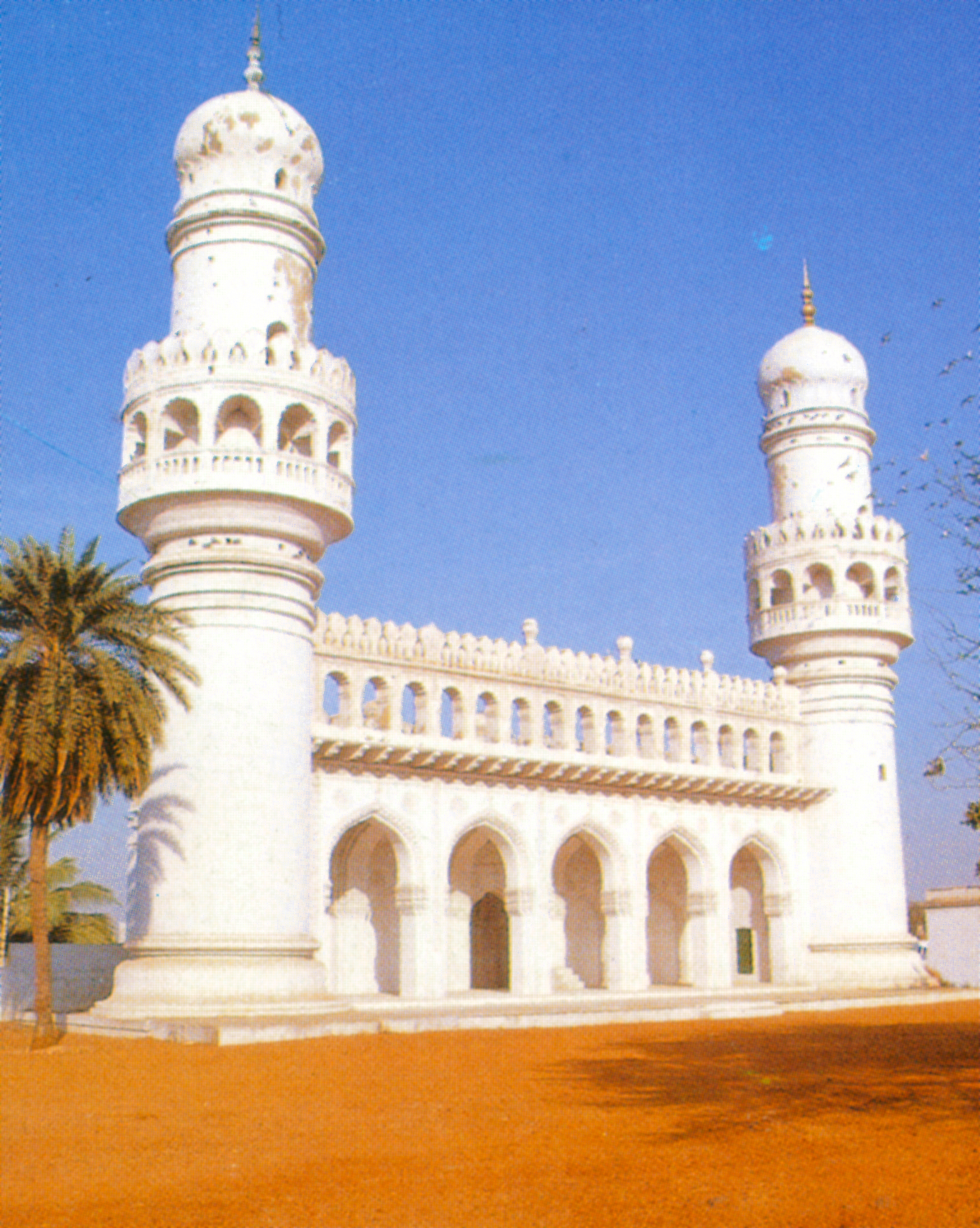
A Picturesque view of Sheopur where Sher Shah Built Eidgah

Dr.Mazhar Naqvi

History remembers Sher Shah Suri as a gifted administrator and a brave general. He is also credited with introducing an effective revenue and postal system in India. During his five year rule from 1540 to 1545, Sher Shah also constructed mosques, roads,  inns and carried out welfare activities for his subjects. His military and revenue reforms are considered to have helped Mughal emperor Akbar greatly in consolidating his position from a teenaged king to one of the greatest rulers of an ably administered vast kingdom. Despite abundance of material on the life and works of Sher Shah, much is not known about the Eidgahs built by him.

Two years after laying the foundation of Sur dynasty, Sher Shah captured the Sheopur fort in Madhya Pradesh in 1542.After the victory, he erected an Eidgah in Sheopur that is still used by people during Eid-ul-Fitr and popularly known as Garden Eidgah. Sheopur is the administrative headquarters of Sheopur district and has been traditionally famous for its wood carving its wood carving. The Eidgah is the most important historical structure of Sheopur city located about 25 kms from Chambal river that serves as a boundary between Madhya Pradesh and Rajasthan.

Sher Shah built another Eidgah in Bhera – a town located on the bank of river Jhelum. Bhera was a very old town but it was completely destroyed due to infighting among the various groups of Pathans. Sher Shah rebuilt Bhera at its present location. The ruinous look of the devastated city caused much distress to Sher shah. He decided to camp near Qaimnath’s hut on the left bank of Jhelum and ordered the construction of new buildings. After gifting the newly constructed town with a very impressive and beautiful Jama Masjid, he also constructed a road and built an Eidgah also on one of its sides. He also commissioned water tanks near Eidgah for the passersby. Bhera is now in Pakistan and  Eidgah and Jama Masjid are reportedly in a good shape still.


Bhera Eidgah with Mosque in Backdrop

Sher Shah was born in 1486.His real name was Farid Khan. He came to be known as Sher Khan after he killed a Lion in the jungle of Sherghati in Bihar province of India. He drove Mughal king Humayun out of India to establish Sur dynasty with Delhi as its capital. He took his surname Suri from his hometown 'Sur’. After ascending throne, he renamed Humayun’s 'Deen Panah' city as 'Shergarh' and also revived the historical Patliputra city that has remained in a ruinous state since 7th century. Sher shah  was one of the  eight sons of  Hassan Khan Suri who was  a prominent figure in the Sultanate of  Bahlol Lodi. He died after suffering a fatal injury during the siege of Kalinjar fort in Bundelkhand and lies buried in a magnificent mausoleum  in Sasaram city where he was born according to Encyclopaedia Britannica. The Indian government has acknowledged the greatbness of sher shah by naming  Asia's oldest and longest  road Grand trunk road as Sher Shah Suri Marg(road).
(Reference available on request)
Sunday, 26 July 2015

Eidgah Built by Space Scientist


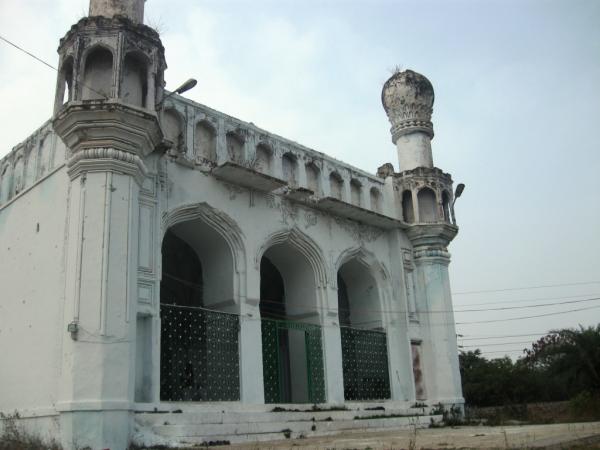
Tumkur Eidgah
Dr.Mazhar Naqvi

The Tumkur Eidgah is perhaps the only of its kind in the world. The Eidgah is unique as it has been erected by an Indian-American space scientist as a gift to the people of his home town. Designed and built by Dr. Nazeer Ahmed, who has worked with NASA on several space missions and was also instrumental in the engineering of the moon land rover for the Apollo mission, Eidgah symbolizes the tremendous faith of the space scientist in mystic interpretations of Islam. It also reflects the complete persona of its builder and his great attachment to his native place.   
While designing the Eidgah, the scientist kept in mind that its subtleties go beyond the usual structure of existing Eidgahs. As a result, a visitor finds the divine name of Allah Almighty built into the structure when he reads its reflection from left to right. The structure also indicates that the world is illusory and is just a reflection of the promised heavens. Another significant feature of Eidgah is that each of its smaller minarets is nineteen feet high from the ground. There are six minarets and if their numbers are multiplied by 19, the figure of 114 emerges. Indicating the total number of ‘Surahs’ in the holy Quran. Further, straight lines drawn from the apex of the minarets intersect where the word "Hu" is inscribed in a red circle. The subtended angle of 112.4 degrees is twice the natural flow angle of the earth. It reminds the devotees that one day they will have to return to Earth to be raised on the Day of Judgment.
The space scientist had discussed this  flow angle as a solution to a Legendre polynomial of the second order while presenting a paper at the fourth National Congress of Applied Mechanics at Harvard University, way back in 1972. He included it in the design of Eidgah, for ‘Hu’ is the abstract divine pronoun for Allah, most exalted, merciful and beneficent. The circle is a constant reminder of  "two bows length or less" wrapped around that shrouded Prophet Muhammad when he stood in divine presence during Shab-E-Meraj. The entire structure is enclosed in a "golden rectangle" where the ratio of the width of the base to the height of the two large minarets is 1.618. The Eidgah complex has a capacity to accommodate about 12,000 devotees and Dr. Nazeer has also constructed a graveyard adjacent to it.

A look at the life of Dr. Nazeer only confirms that he strives to meet all the expectations of Allah from a true believer. He owns 14 patents in US , makes money but dole out it to support the  studies of economically weak children from the earnings. His personality just not includes academic excellence but also traits like humility, humbleness, craving for helping needy and a strong desire to remain attached to his roots. His works and deeds have earned him so much popularity among the citizens of Tumkur, a city about 70 kms from Bangalore that scores of people would volunteer to take a visitor to his home next to Old Bar Lane if he asks about him. The scientist who is simply ‘Nazeer Saab’ for people Tumkur, has offered financial assistance to over 10,000 students drawn from all communities to enable them finish their studies. His philanthropic deeds give a message to the believers that charity should not be just restricted to the day of Eid ul-Fitr but be an ongoing process. The love for country has brought him back to Tumkur. He contested election and won also from Tumkur in 1978 with a thumping margin. He did not find politics as he had perceived and soon turned disenchanted being averse to corruption and unable to work for social and economic uplift of people –the main reason behind his decision to join politics. The disorientation from politics propelled him to test skills in Sufism. He has visited shrines of Turkish Sufis several times and has turned him into a historian with deep interest in Islamic studies.( References available on request)


Wednesday, 22 July 2015

Panbari Eidgah-Mosque of Assam

Panbari Eidgah-Mosque in Assam(India)
Dr.Mazhar Naqvi
The historic Panbari Eidgah Mosque(Masjid) does not figure among the popular and famous mosques of India. But it does not reduce its significance as the oldest and highest  mosque of Assam- largest among the north eastern states of India. The mosque is located about 25 km from Dhubri town on national highway 31.Also known as Rangamati Masjid, the mosque also serves as Eidgah during Id ul-Fitr and Id ul-Azha for the believers of Parbani and Rangamati towns.
The construction of the mosque dates back to 15th or 16th century and its three-domes are considered to be an excellent example of north- eastern architecture with Islamic influence. It is believed that the mosque was erected during the reign of Koch rulers who turned the prosperous town of Rangamati as their frontier post. The Sultans, Mughals and Nawabs of Bengal also used Rangamati Fort as their base camp while penetrating into north-eastern hills to subdue the rulers of small hill kingdoms of north- east. It is also believed that Rangamati attained zenith of its glory when Alauddin Husain Shah declared the town as his headquarters and soldiers of his army used Parbani mosque for offering daily prayers. Husain Shah was the founder of HusainShahi dynasty. The mosque remained unused later. People remained unaware of its existence for more than two centuries. It happened when Rangamati lost its strategic importance and gradually faded into oblivion as a garrison city.
The mosque surfaced about two hundred years ago when some local residents found it in Panbari ‘Pahar’(Mountain) under the thick foliage. As the structure of the mosque was only covered with mud and the vagary of weather had time had not caused it much damage, they cleaned the place and began offering prayers there regularly. Since then, the mosque has earned the status of a holy shrine for the people of western Assam. The entire Panbari ‘Pahar’ is revered because of the chance discovery of the mosque. The place attracts large number of devotees to have a glimpse of mosque and to also watch the scenic beauty of the hills with its rich flora. It is ironical that Assam government has yet to realize the tourism potential of the mosque due to its unique location and archaeological significance. The Panbari area was in news a couple of years ago when remains of an old city consisting of brick-plinths, terracotta antiquities with scores of coins belonging to Mughal period were discovered near the mosque. 
It was then expected that the state government would undertake more excavations near the mosque to unearth precious pieces of antiquity but it just proved to be a dream.Similarly, when a leading newspaper of Assam had highlighted in 2011 about the losing  glory of the mosque due to the apathy and negligence of government towards its maintenance and preservation, people had again hoped that the government would take adequate measures to  preserve the mosque reportedly built during the rule of Husain Shah between 1493 and 1519 AD.But their hopes were once again belied and Panbari or Rangamati mosque despite its historical importance remains obscure to the people beyond Assam (Reference available on request)   

Tuesday, 21 July 2015

Eidgah with India's First Glass Mosque


India's First Glass Mosque inside Laban Eidgah Complex in Shillong

Dr.Mazhar Naqvi

Shillong, the capital of Meghalaya, has the distinction of having India’s first glass mosque inside its Eidgah. Known as Scotland of the East for its scenic beauty, Shillong has less than 1 lakh Muslims but the three year old glass mosque has put the city famous among the believers all over the world.
Named as Medina Masjid, the glass mosque  is a four-storey building. It is 120 feet high and 61 feet wide and has been erected inside Laban Idgah complex .The mosque is also very close to  the garrison grounds along the Umshyrpi river and has a capacity to accommodate about 2000 devotees easily. The managing committee has also earmarked a separate place inside the mosque for the exclusive use of women.

In a bid to ensure optimum utilization of the newly built mosque, the committee also runs an orphanage under the name of Meherba, a well-stacked library and also a theological institute where comparative study of religions is also offered apart from the traditional Islamic teachings.

Prior to the construction of Medina Masjid, Shillong had six mosques. These mosques were located in  police Bazar, Laban, Laitumkhra, Garikhana, Bara Pathar and Jhalupara areas. The city also had two graveyards at Laban and Mawprem localities and a traditional Madarsa in Garikhana area. Among the mosques, Laban has traditionally been a significant place for the local Muslims because besides being a mosque it also served as Eidgah and graveyard.
In the wake of its traditional importance and popularity when the decision to erect in Shillong the first glass mosque of India was taken Laban Eidgah complex was selected as its location. Shillong was the capital of Assam till 1974 and its Muslim population of the town comprises of the Khasi, Assamese, Bengali, Hindi and Nepali speaking people. The history of Muslim settlements in Shillong dates back to 17th century and the town has been an example of communal harmony.

It was the peaceful co-existence of Muslims and non-Muslims communities that prompted many a Hindus to lend a helping hand in the construction of Medina Masjid. The beauty of mosques is worth seeing at night when its glasswork glows and glitters. Built at a cost of about  Rs.2 Crore, the mosque took one and a half years in its completion and  open for public in 2012. Those who see  imposing and resplendent structure of glass dome and glass minarets of the mosque, describe it simply an architectural marvel.


This year too on Eid-ul-Fitr day witnessed the biggest congregation of devotees at Medina Masjid inside Laban Eidgah complex. It was reported that over 8000 devotees offered prayers. Ever since glass mosque has been constructed in Shillong, the number of devotees has been swelling tom offer Eid prayers there.

Sunday, 19 July 2015

Eidgahs(Idgahs) of Hyderabad Deccan


Dr.Mazhar Naqvi

The heritage of Hyderabad surely remains in news. Be it restoration of the mausoleum of Mahlaqa Bai Chanda or repairs of Ashurkhanas or Nizam’s palaces. But there is certainly dearth of material about Eidgahs (Idgahs) of Hyderabad. It may be because of the fact that Eidgahs are used only twice a year for prayers on the occasion of Eid-ul-Fitr and Ed-ul-Azha.

In terms of popularity, Eidgah Mir Alam surpasses its counterparts in Hyderabad. But neither Mir Alam Eidgah nor Purani Eidgah were in news for Eid-ul-Fitr prayers recently. It was Eidgah inside the Qutb Shahi Tombs that remained center of attraction through Ramadan.   They had a reason to look forward to be at Qutb Shahi Eidgah on Eid-ul-Fitr day following its restoration by Agha Khan Trust.The 16th century Idgah had lost much of its sheen and grandeur due to vagary of weather and apathy of State Archaeology Department. The layers of paint and the intricate work on Eidgah had turned greyish. Likewise, the minarets and the turrets on either side were also on the brink of collapse as a result of self-imposed restriction by State Archaeology department to give Eidgah a whitewash once in a year.
 
When Agha Khan Trust decided to restore the lost glory of   72 monuments in a span 10 years at a cost of Rs. 100 Crore, it included Eidgah also under its ambitious project and pressed into service craftsmen drawn from Rajasthan and Delhi to restore to its original glory. They chipped off the green and white paint on Eidgah’s wall with great care to expose elaborate flower design and craftsmanship bearing Turkish-Iranian influence on minarets that had also tilted alarmingly and now straightened. Craftsmen worked for over six months to diligently replace the cement with lime plaster to overcome destruction caused by humans and the vagaries of nature in the past 400 years.
The Idgah is just a small part of Ibrahim Bagh near Qutb Shahi tombs, containing 40 mausoleums, 23 mosques, six step wells, pavilions and gardens. Devotees were dazzled when they reached Eidgah to offer prayers, finding it spotless and done up in ornate stucco plaster patterns.There are seven arches with ‘mihrab’ in the centre in the Eidgah. Imam leads the prayer from mihrab and a huge scaffolding is erected to reach Eidgah as it is  6 meters high and 31 meters wide.
The most popular Eidgah of Hyderabad is named after Mir Alam ,the Prime Minister from 1804 to 1808 during the reign of the third NizamAsaf Jah 3rd. Eidgah is in Tadbun locality close to Mir Alam tank and Nehru Zoological Park. Mir Alam had laid the foundation of tank on July 20, 1804 and it was finished on June 8, 1806.The popularity of Eidgah had prompted the authorities to extend it  on the right side up to the graveyard  to accommodate more number of devotees during the Eid prayers.
Hyderabad also has yet another significant Eidgah. It is called as Purani Eidgah. It is also recorded as a heritage site and its most attractive feature is two astounding pillars having striking resemblance to the historic Charminar. This Eidgah is located in Eidi Bazaar area and a roofless, flat rectangular ground with a Qibla wall facing west. The Qibla wall  is roofed enough to accommodate the first row of devotees and The Imam. The Eidgah dates back to the period of Sultan Muhammad Qutb Shah,1612-26. Since Mir Alam erected a new Eidgah near his tank, This Eidgah came to be known as Purani(Old) Eidgah. It however still attracts quite a large number of believers.
Purani Eidgah
The city also has an Eidgah that is named after Nawab Roshan ud- Daula. Probably built by Nawab Roshan ud-Daula, Eidgah was in a deserted condition and  it was re-established by b Sufi Mohammad Mahboob Shareef Sahab in 2003.It is also visited by a large number of believers during Ramadan and Eid.  .(References available on request).


Purani Eidgah

Eidgah Roshan ud-Daula

Friday, 17 July 2015

Eid-ul-Fitr- Campaign Against Hunger


Dr.Mazhar Naqvi

Eid-ul-Fitr is the most important Islamic festival even though the day does not mark any historical event or episode. The reason-It offers the believers an occasion to offer thanks to Allah for having given them the strength and the will to observe fast during Ramadan. Imam Hazrat Ali ibne Abi Talib while delivering a sermon on Eid-Ul-Fitr highlighted its significance in these words:
"O people! Verily this day of yours is the day when the righteous are awarded and the wretched are losers. It is a day which is similar to the one on which you shall be standing (before your Lord). Therefore, when you come out of your homes to go to places of your prayer, remind yourselves about the day when you (your souls) shall come out of your bodies to go to your Lord. When you stand on places of your prayer, remind yourselves of your standing in presence of your Lord (on the day of Judgment). And when you return to your homes (after prayer), remind yourselves about your returning to your homes in Paradise.
      O Servants of Allah! Verily the minimum reward for those men and women who fasted (during Ramadan), is an Angel, who calls out to them on the last day of the month of Ramadan (saying): O Servants of Allah! Rejoice the Glad Tiding that all your previous sins have been forgiven. Therefore, watch out in those things which serve as your re-creation (on this day and days to follow)”. 

Likewise Imam Reda described Eid-Ul-Fitr as “a day of unity. Hence, it is a day to give thanks and reaffirm faith in His(Allah) favors and praise Him. Eid day is the first day when eating and drinking is once again permitted during daylight hours. So, for the seekers of Truth, Eid-Ul- Fitr is the first day of the year”.

Imam Muhammad Baqar while speaking about Eid-Ul-Fitr also mentioned the sadness that it also accompanies. Being aware of Eid falling on the 10th day of Imam Ali’s martyrdom, Imam used to remind people about the sadness resulted from the usurpation of the rights of the Ahle-Bait and the gross violation of human rights.

His son Imam Jafar Al Sadiq explained the significance of festival in these words  “Fasts remain suspended between the earth and the heavens until Fitra is executed”. The emphasis on Fitra is to ensure that both have and have-nots celebrate Eid with same joy, fervor and equality. Imam through his golden words simply reminded the people that the rejoicing on Eid is to obey and thank Allah and serves humanity, the two most important principles of Islam defined by the Prophet.

The awaited Imam Al Mahdi also expresses similar views in Dua-E- Nudbah (Supplication of Lamentation).He says “The message of Eid Ul-Fitr is that no Muslim remains hungry on this day. It is a day that the rich and the poor enjoy happiness of the day, as the well-off give Fitra to the less well off. The Fitra ensures acceptance of the fast”. This prayer is known as supplication of lamentation as the Hidden Imam had in his mind the hunger and thirst of Imam Hussain and his companions on 10th Muharram at Karbala when he recited the Dua.

From the sayings of infallible Imams, it is clear that Eid is not just feasting after a month long Ramadan fasting. Rather, it is an occasion to offer thanks giving prayers by believers in large congregations in open space, standing shoulder to shoulder, to exhibit the equality and equity- an inherent and essential feature of a society based on Islamic tenets. The most significant aspect of the day lies in the fact that Eid expects every Muslim to give the needy food at the rate of the prescribed weight per every member of his household, including servants and guests who were sheltered under his roof the preceding evening.

Eid also affords Muslims an opportunity of spiritual stock-taking by pondering over the strength of his will or the weakness of his character felt by him during Ramadan. Eid is however the day for those persons who disobeyed Allah as an end to the month-long pangs of conscience, inner struggle and continuous realization of the feebleness of their character. Eid –Ul-Fitr liberates them from all sorts of arguments and excuses against fasting.(References available on request)


Eidgahs(Idgahs) of Mughal Era


Agra Eidgah

Dr.Mazhar Naqvi

Much has been written about Mughal Emperors for erecting splendid mosques, forts, palaces, mausoleums and gardens. One of the wonders of the world, Taj Mahal at Agra stands as the most delicate and refined example of Mughal architecture. However, Eidgahs or Idgahs built during the Mughal period have failed to earn the attention of historians and most of them remain unknown, except the Shahi Idgah of Mathura. It is well-known as it was erected by Emperor Aurangzeb on a portion of Shri Krishna Janambhumi temple and BJP, VHP and Bajrang Dal leaders use it during elections to bring non- Muslim voters to their fold. Other Eidgahs built by Mughal kings and their nobles remained unheard as they are used only twice a year-Id –ul- Fitr and Id- ul- Adha.

The founder of the dynasty, Babur had built an Eidgah at Kabul in Afghanistan. Though in several accounts it is reported to be commissioned by Babur but another legend puts Babur’s great grandson Jahangir as its original builder. He was appointed as governor  of Kabul by his father  Emperor Akbar and it is believed that he had used local quarries and materials for co9nstruction of Eidgah mosque. However there is no controversy with regard to the existing grandeur of the mosque as a result of renovation work carried out by King Abdur Rahim Khan in 1893 or before. Idgah Mosque reflects the rich Islamic architecture and attracts visitors in large number. The Eidgah is painted in beige and white and has four minarets. The courtyard area is capable of holding accommodating thousands of devotees for Eid prayers.
Babur’s son Humayun did not erect any Eidgah because of fluctuating fortunes. His son and the greatest among the Mughal Monarchs, Akbar, is reported to have erected an Eidgah in Fatehpur Sikri. There is nothing on record to suggest that Jahangir, son of Akbar, built any Eidgah during his rule as King of Hindustan. His son Shahjahan however is often credited with commissioning an Eidgah in Agra in just forty days. Because of this structure, Agra possesses Eidgah railway station and bus stand. Agra Eidgah is an attractive specimen of Mughal architecture as compared to other popular Eidgahs in India and her neigh boring countries. It is  a tall and  long Qibla wall with arched niches. It looks like a Mughal style mosque with prayer hall and is set at the end of a large walled garden.
The next best Mughal Eidgah is of course in Dhanmandi locality of Dhaka, the capital of Bangladesh. Eidgah was constructed by Mir Abul Qasim, Dewan under instructions from Prince Shah Shuja, governor of Bengal and second son of Shahjahan. This beautiful Eidgah has been in use for Eid festivities since its commissioning in 1640 AD. Noted conservationist architect Abu Saeed M Ahmed has written “Dhanmandi Eidgah is the oldest surviving Mughal monument in Dhaka city. There is no second one with the architectural forms and features similar to it."
Among Mughal Emperors, Aurangzeb, has to his credit the commissioning of maximum number of Eidgahs. History records him as an orthodox emperor hence, he focused more on the4 construction of Mosques and Eidgahs. Apart from Mathura, he also commissioned Eidgahs in Delhi and Bijapur. When Aurangzeb ascended throne in 1658, he decided to erect a large Eidgah on the outskirts of Delhi. He considered  its erection essential because of the existence of Akbar’s Eidgah in Fatehpur Sikri and Agra Eidgah that Shah Jahan had built in 40 days and where he himself had offered namaz as a prince. Delhi Eidgah is a large square enclosure built in 1682  as a gathering place for Muslims on important days such as Eid. He built it on a area of 31,484 sq yards, surrounded by thousands of sq yards opn grounds where devotees could offer Eid prayers in large number. The main gate at the front side has also two small gates the entrance and exit of the devotees. The same pattern is followed on the north and south sides of the Eidgah. The complex is one of its own kind in Asia and Indian President Fakhruddin Ali Ahmad had taken personal interest to save its open grounds from encroachment.
Similarly when Aurangzeb seized Bijapur and found that there was no proper Eidgah, he commissioned one and it is known as Aurangzeb Eidgah in Bijapur even today. Another significant Eidgah of Mughal period is is in Multan (Pakistan) and it is called as    Shahi Eidgah Masjid. No Emperor or prince was behind its commissioning. It was erected in 1735 AD by Nawab Abdul Samad Khan, the governor of Multan. It is a very spacious mosque with a vast courtyard and a huge prayer chamber measuring two hundred and fifty feet long and fifty-four feet broad crowned by seven domes.
Eidgah or Idgah is the term used in South Asia for the open-air gathering place, usually outside the city or at the outskirts to offer Eid prayers. It was a practice of Prophet Muhammad to perform the Eid prayer in an open space on the outskirts of the city. Hence, it is considered Sunnah to offer Namaz-E-Eid at an  Eidgah. The first Eidgah was erected at the outskirts of Medina and it was about 1,000 footsteps away from Masjid-e-Nabuwi.(References available on request).

Kabul Eidgah